Braking
Stopping power — the most underrated performance metric in all of motorsport.
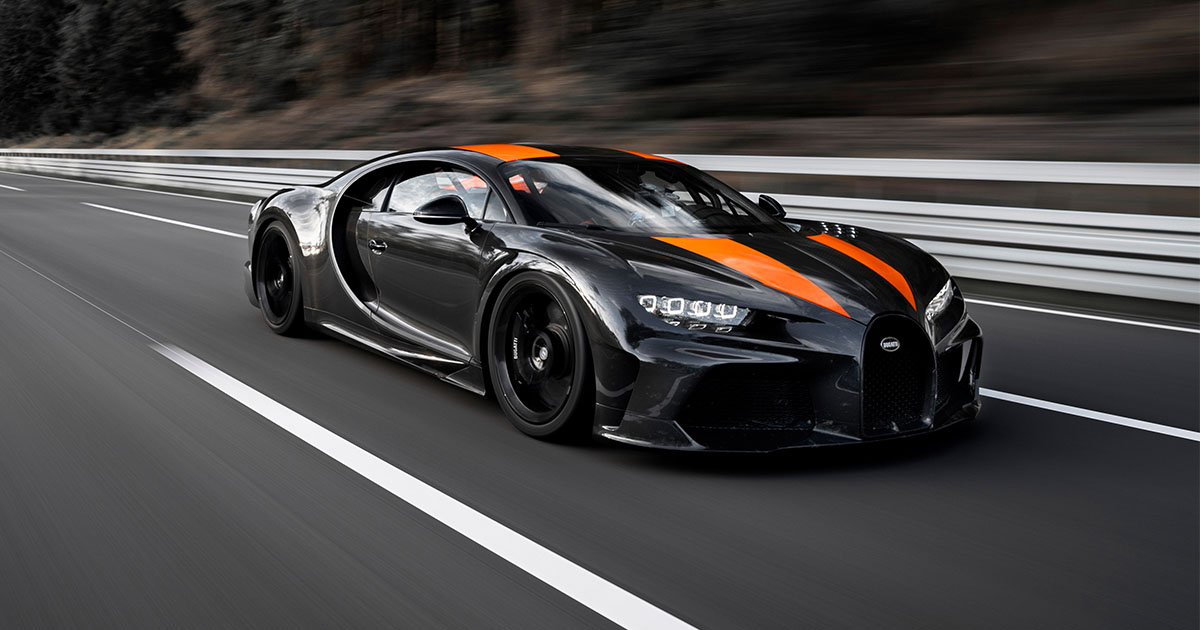
Bugatti Chiron
The Bugatti Chiron stops from 60 mph in just 95 feet — about the length of 3 cars. At top speed it deploys a huge rear spoiler that acts as an air brake, adding massive stopping force on top of its enormous carbon ceramic brake discs. Braking from 250 mph to zero takes just 9.3 seconds and leaves black marks 1,000 feet long.
Bigger Brake Discs
Bigger brake rotors absorb and spread heat more effectively. When you brake hard, enormous energy turns into heat — if the brakes get too hot they stop working, called brake fade. Larger discs with ventilation holes let air flow through to cool them down, so they keep working even after repeated hard stops.
Carbon Ceramic Brakes
Carbon ceramic brake discs are made from carbon fiber mixed with silicon. They are much lighter than steel brakes — saving up to 20 lbs per corner — and they can handle temperatures over 1,800°F without fading. They last much longer too. The downside is cost — a set can cost $15,000 or more.
Tire Contact & Downforce
Braking is limited by how much grip your tires have. Wider tires with more rubber on the road can handle more braking force before locking up. At high speeds, aerodynamic downforce pushes the car into the ground, increasing tire grip massively — this is why F1 cars can brake from 200 mph in just a few seconds.